
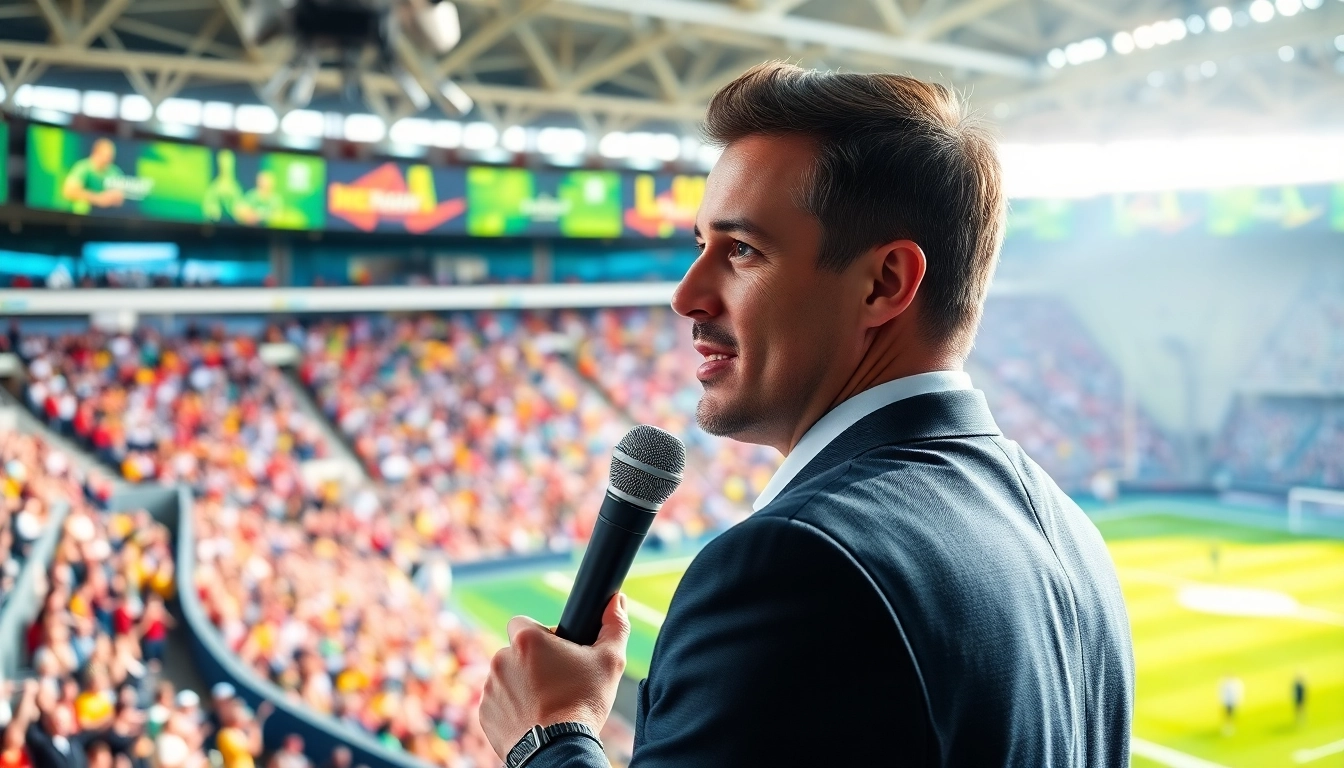
Understanding the Essentials of Sports Broadcasting
Sports broadcasting has transformed the way fans engage with their favorite sports. It combines the excitement of live events with the convenience of accessible viewing. By providing comprehensive coverage, analysis, and commentary, sports broadcasting has created a unique ecosystem where sports enthusiasts stay informed and entertained. To explore this fascinating domain, let’s delve into its history, key roles, formats, and much more. This comprehensive look at Sports Broadcasting will be instrumental for anyone interested in the subject.
History and Evolution of Sports Broadcasting
The journey of sports broadcasting is a rich tapestry woven through technological advancements and changing public tastes. Sports began to be broadcasted over the radio in the early 20th century, providing fans with the ability to follow events live, albeit without visuals. The first televised sports event, a baseball game, was shown in 1939, marking a foundational shift in how sports were consumed. The evolution of color TV in the 1960s further enhanced the viewing experience, ushering in an era where sports broadcasting became a staple of television programming.
Through the 1970s and 1980s, cable networks broadened the scope of sports broadcasting, introducing dedicated sports channels that allowed for 24/7 programming. ESPN emerged as a pivotal player during this time, changing how fans interacted with sports content. The rise of the internet in the late 1990s and early 2000s brought about a digital revolution in sports broadcasting, paving the way for streaming services and online platforms which provided fans with greater access to global sporting events.
Key Roles in Sports Broadcasting
To deliver high-quality sports broadcasting, a variety of key roles work in harmony. Behind the scenes, producers and directors are responsible for the overall look and flow of a broadcast. They coordinate camera angles, audio inputs, and on-screen graphics to ensure seamless transitions between segments. Commentators and analysts add color and insight, enhancing the overall viewer experience. Commentators provide play-by-play coverage, while analysts critique and contextualize the action.
Apart from these, technical crew members such as camera operators, sound engineers, and graphic designers play an essential role in capturing and enhancing the visual and auditory experience for viewers. In the age of social media, social media managers and digital strategists have also become integral to the broadcasting ecosystem, ensuring that audience engagement extends beyond traditional viewing.
Understanding Broadcasting Formats
Sports broadcasting encompasses various formats, each designed to meet different viewer needs. Live broadcasts remain the most popular, giving fans real-time updates and action. Replay formats allow fans to relive crucial moments, while highlight shows condense a match into a shorter viewing period, catering to those with limited time.
Another popular format is “as-live” broadcasting, where events are shown with a slight delay, giving broadcasters the opportunity to enhance content through commentary and analysis. Additionally, podcasts have gained traction, offering fans in-depth discussions and interviews related to sporting events, players, and trends. This multi-faceted approach ensures that there is something for everyone, accommodating all fan preferences.
Technical Aspects of Sports Broadcasting
Equipment Used in Sports Broadcasting
The technical side of sports broadcasting hinges on a variety of equipment that ensures high-quality production. Cameras equipped with high-definition capabilities are vital for capturing the dynamism of sports events. Diverse camera angles, including drones and handheld units, enable broadcasters to present different perspectives.
Audio equipment, including microphones and soundboards, is equally crucial. High-quality microphones capture the action and commentary clearly, while soundboards allow for meticulous mixing of audio from different sources. Graphics and scoreboards are managed by graphic operators who use specialized software to present real-time information and statistics, enhancing the viewing experience.
Understanding Transmission and Streaming
The transmission of sports broadcasts has evolved significantly with the advent of digital technology. Traditional methods include terrestrial and satellite broadcasting, which typically deliver signals directly to televisions. However, streaming services have garnered immense popularity, allowing fans to watch games on their devices easily.
This shift to online platforms means broadcasters must ensure their streams are reliable, high-quality, and free from interruptions. The adoption of content delivery networks (CDNs) helps distribute data efficiently, reducing latency and improving viewer satisfaction. Additionally, incorporating features such as multiple feeds, cameras, and angles enhances interaction and engagement for the audience.
Challenges in Technical Setup
Every sports broadcaster inevitably faces technical challenges. Issues such as signal loss, equipment failure, and unexpected weather conditions can disrupt a live broadcast. Having contingency plans that include backup equipment, alternative transmission methods, and pre-arranged emergency procedures is crucial for a smooth operation.
Network bandwidth can also become a bottleneck, especially during peak viewing times. Broadcasters need to deploy multiple data streams to ensure customers receive uninterrupted service. Maintaining communication between various teams involved in broadcasting helps quickly resolve any issues that arise, enabling a seamless experience for viewers.
Crafting Compelling Content for Sports Broadcasting
Storytelling Techniques in Sports
At its core, sports broadcasting is about storytelling. Whether it's a comeback win or an athlete overcoming adversity, compelling narratives resonate with audiences. Broadcasters should aim to create emotional connections between viewers and the content through effective storytelling techniques.
Utilizing elements such as character development, conflict, and resolution can enhance narratives. Personal stories about athletes and teams create relatable connections that engage audiences on a deeper level. Visual storytelling through slow-motion replays, infographics, and behind-the-scenes features also enriches the narrative and keeps audiences invested.
Interviewing Athletes and Experts
Interviews are crucial for providing insights and context in sports broadcasting. Successful interviewing requires preparation, including research about the subjects and understanding their backgrounds. Open-ended questions allow guests to share their stories authentically, leading to engaging conversations that viewers appreciate.
Moreover, cultivating a comfortable atmosphere encourages interviewees to speak candidly. Pay attention to body language and tailor questions to elicit thoughtful responses that resonate with fans. Live interviews can be risky but, if executed well, they create dynamic content that enhances the overall broadcast experience.
Engaging the Audience through Social Media
In today’s digital landscape, social media is a powerful tool that influences sports broadcasting. Engaging with audiences on platforms like Twitter, Instagram, and Facebook allows broadcasters to extend their reach beyond traditional media channels. Social media facilitates real-time interaction and feedback, enhancing the overall viewer experience.
Creating shareable content, such as highlight clips, player interviews, and behind-the-scenes moments, boosts engagement. Polls and Q&A sessions can foster viewer participation, allowing audiences to feel like they’re part of the conversation. Embracing social media as an integral part of sports broadcasting not only enhances reach but also builds a loyal community around the content.
Performance Metrics in Sports Broadcasting
Analyzing Viewer Engagement
Understanding how audiences engage with broadcasts is key for continuous improvement. Viewership numbers, average watch time, and audience retention rates are essential metrics that reveal how effectively content resonates with fans. Analyzing these metrics helps broadcasters tailor their strategies, ensuring they meet the evolving needs and preferences of viewers.
Platforms like Nielsen offer insights into ratings and audience demographics, enabling broadcasters to shape content that hits the mark. Surveys and feedback forms are also valuable tools for gauging viewer reactions, providing qualitative data that complements quantitative insights.
Key Performance Indicators for Broadcasters
Key performance indicators (KPIs) serve as benchmarks for measuring success in sports broadcasting. Apart from traditional metrics like viewership and ratings, engagement levels on social media, audience sentiment, and advertising revenue should also be monitored.
Broadcasters can track KPIs over time to identify trends and shifts in audience behavior. For instance, spikes in social media engagement during specific moments in a game might indicate topics worth exploring further. These insights enable proactive adjustments to content strategies, enhancing overall broadcast performance.
Adapting Content Based on Feedback
Feedback is a valuable component for refining sports broadcasts. Actively seeking and analyzing viewer input allows broadcasters to identify areas for improvement and adapt their content strategies accordingly. Incorporating feedback from various channels, including social media, surveys, and audience interaction during shows, creates a feedback loop that drives innovation.
Broadcasters can implement changes based on collective viewer insights, enhancing the appeal of their programs. By continuously monitoring audience reactions and adapting content to align with viewer preferences, broadcasters foster a loyal audience who feels valued and appreciated.
Future Trends in Sports Broadcasting
The Impact of Technology on Sports Broadcasting
The future of sports broadcasting is intrinsically linked to technology. Advancements such as augmented reality (AR) and virtual reality (VR) are poised to revolutionize how fans experience sports events. From immersive viewing experiences at home to interactive stadium experiences, the integration of technology enhances engagement.
AI-driven analytics are also transforming the industry, providing broadcasters with nuanced insights into player performance and fan sentiments. Automated highlights and data-driven storytelling ensure that content remains relevant and captivating for audiences.
Emerging Platforms and Formats
As consumer preferences evolve, so do the platforms used for sports broadcasting. Streaming services are growing in popularity and are set to become the primary means of accessing sports content. These platforms offer flexibility, enabling viewers to consume content on their own schedules.
Additionally, innovations like live streaming via social media platforms introduce new ways to engage with audiences. Broadcasters must remain agile and adapt to emerging platforms, ensuring they reach audiences where they congregate.
Sustainability in Sports Broadcasting Practices
In recent years, sustainability has taken center stage in how sports broadcasting operates. Broadcasters are increasingly focusing on reducing their environmental impact through efficient resource use and sustainable production practices. Initiatives promoting remote broadcasting reduce carbon footprints associated with travel.
Engaging audiences through campaigns highlighting sustainability in sports not only bolsters a broadcaster's reputation but also promotes awareness about environmental issues. This not only paves the way for responsible broadcasting but also creates a strong connection with socially conscious viewers.
FAQs
What is sports broadcasting?
Sports broadcasting involves the transmission of live sports events, analysis, and commentary through various media formats, including television, radio, and online platforms.
How has technology impacted sports broadcasting?
Technology has transformed sports broadcasting through advancements like streaming services, AR, VR, and AI analytics, enhancing viewer experiences and content delivery.
What are the key roles in sports broadcasting?
Key roles include producers, directors, commentators, analysts, technical crew members, and social media managers, all contributing to a cohesive broadcast.
What are common challenges faced in sports broadcasting?
Challenges include technical issues like signal loss, equipment failure, and ensuring seamless live coverage, which require robust contingency plans.
How can broadcasting content be improved based on viewer feedback?
Broadcasters can analyze viewership data and audience feedback to adapt content, ensuring it aligns with viewer preferences and enhances engagement.